Behind the Call: Guiding Future Priests Through Formation
- Written by Rebecca Taylor
- Length 3 minutes, 29 seconds
- Category All News & Content, Articles, Diocesan Family, Leadership
 Email
Email
For years, the Rev. Mark Lafler has helped postulants in the Episcopal Diocese of Central Florida navigate the many steps toward priesthood, from theological education and finances to family responsibilities and formation. His work, alongside the bishop and diocesan discernment team, reflects a collaborative, personalized approach to preparing candidates for ordained ministry.
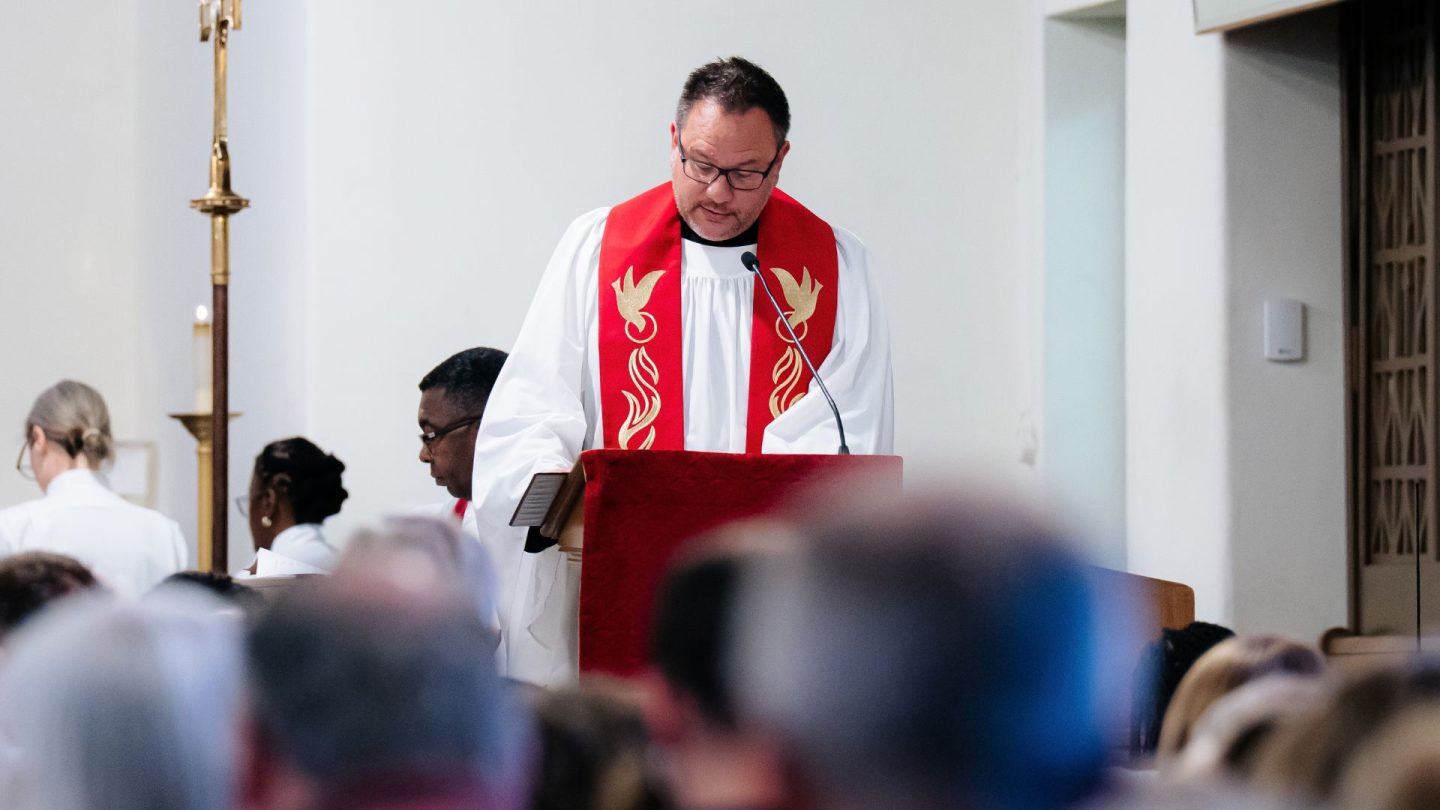
The road to ordained ministry is often long and winding. For those discerning a call to the priesthood, the journey can involve navigating options for theological education, finances and family responsibilities while fulfilling the canonical and diocesan requirements for ordination. Helping postulants make sense of those pieces and chart a path forward has been part of the Rev. Mark Lafler’s ministry in the Episcopal Diocese of Central Florida.
Lafler, president of the diocesan Standing Committee and rector of St. Edward’s, Mount Dora, has been helping guide those discerning ordained ministry since joining the Commission on Ministry in 2018. A few months after the Rt. Rev. Dr. Justin S. Holcomb’s consecration in 2023, the new bishop asked Lafler to take on a more intentional role in evaluating and advising postulants as they prepared for the priesthood. In this capacity, he now serves as diocesan advisor for discernment formation.
Much of that work, Lafler said, begins with listening to their individual needs and concerns.
Some can easily relocate to attend seminary, while others need online programs. Previous education, ministry experience and finances can also shape the path ahead. Lafler works with each postulant to assess their unique circumstances, explore available options and develop a recommended formation plan.
“The biggest thing the postulants need is guidance,” he said. Finding the right fit for formation, he explained, can be daunting.
Lafler’s conversations generally become more focused after a person attends the Bishop’s Advisory Committee for Aspirants to Ministry and becomes a postulant. From there, he works with each postulant to consider what formation will require, discussing everything from theological education and financial aid to family responsibilities and the prospect of returning to school.
And formation does not necessarily take place exclusively at a seminary. Depending on a postulant’s needs and previous experience, a formation plan may also include mentorship, courses through the Institute for Christian Studies and guided studies within the diocese.
Ultimately, each postulant’s formation remains under the bishop’s authority. Lafler makes his recommendation to Bishop Holcomb and then communicates the approved plan to the postulant and the person’s Commission on Ministry representative. As formation continues, the COM regularly discusses each postulant’s progress.
By the time a new priest reaches ordination, the journey has often included years of discernment, study, prayer and conversation. For Lafler, some of the most meaningful moments in the process happen long before the laying on of hands.
“I know them; I’ve prayed with them; we’ve swapped stories,” Lafler said of the people he has guided through formation. “And I am excited about what the Holy Spirit will do with their calling as they share the gospel of Jesus.”
The formation process involves a network of people working largely behind the scenes. Lafler particularly credits Marilyn Lang, who has worked alongside him for years as the diocesan leadership development coordinator but will retire at the end of this year. He also serves with Meagan Feibelman and Adria Northern, who have assisted in the work over the past two years as part of the diocesan Discernment Team. The Ven. Julie Altenbach, archdeacon, is also a key part of this team.
“It really takes a team of people and a lot of communication,” Lafler said.
The diocese has begun a new partnership involving Armed Forces chaplains moving through the discernment process, and although he has not yet had significant direct involvement, he expects to help guide those candidates as the partnership gains momentum.
For Lafler, the work ultimately comes back to the people behind the process and seeing their discernment lead to ordained ministry.
“It really is fulfilling and a great feeling to see so many new priests in our diocese and in the wider Episcopal Church that the Commission on Ministry, the Diocesan Discernment Team and I have had a role in helping,” he said.
CFE Digital Digest
The CFE Digital Digest is our monthly email newsletter featuring timely news, stories, and updates between print issues of the Central Florida Episcopalian.