$250K Grant Award Launches Diocese Into Multimedia Storytelling Effort
- Written by Marti Pieper
- Length 10 minutes, 5 seconds
- Category All News & Content, Articles, Diocesan Family, Episcopal & Anglican News, Leadership
 Email
Email
The Episcopal Diocese of Central Florida has received a $250,000 grant through the Beautiful Stories Project to launch “Coming Home,” a five-year initiative sharing powerful stories of faith, grace and return through video, print and digital media. By highlighting authentic journeys of people who found or rediscovered life in Christ, the project aims to inspire hope, strengthen congregations and invite others to experience the Church’s welcoming community.
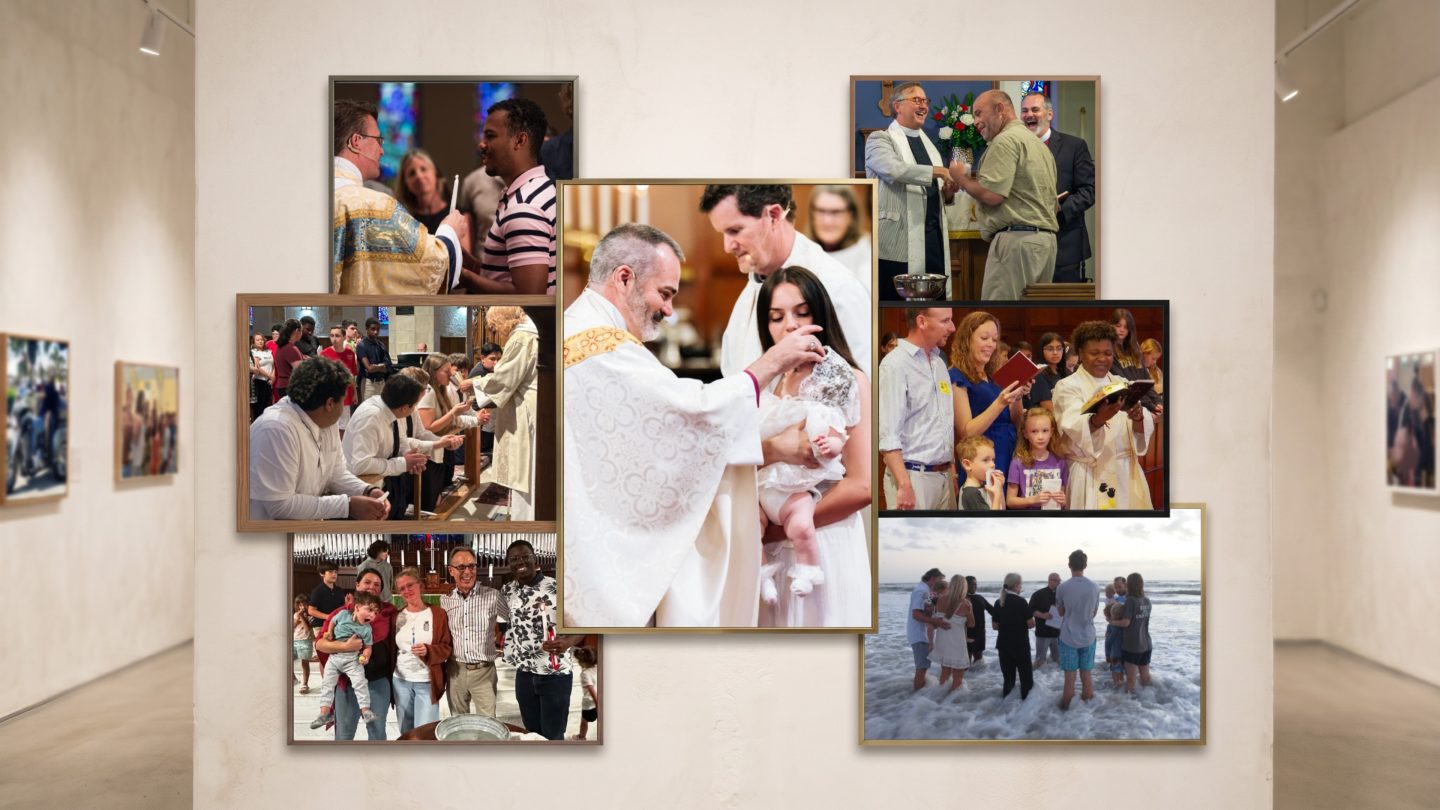
An elderly woman, who, despite growing up in church, “never understood why Jesus mattered” until her newfound church’s faithful messaging introduced her to the gospel less than a year before her entrance into heaven.
A “sometime” church attendee who had not made God a priority but was baptized by immersion along with his three children – 16, 13 and 9 – at his church’s annual Parish Fish Fry.
A teenager who responded to the gospel through a combination of radical hospitality and her church’s Alpha program, where she experienced the transforming love of Jesus and now leads other students in exploring matters of faith.
These are some of the beautiful stories of coming home to the Church that Erik Guzman, director of communications for the Episcopal Diocese of Central Florida, and his team have had the privilege of recounting in recent years. And through the awarding of a $250,000 grant, Guzman will have the opportunity to oversee the telling – in video, print and online formats – of 25 unique faith-stories from diocesan churches over the next five years.
The Beautiful Stories Project, led by the Rev. Dr. Winn Collier (director of the Eugene Peterson Center for Christian Imagination at Western Theological Seminary in Holland, Michigan), received a $5 million grant from Lilly Endowment Inc. via its National Storytelling Initiative. The Peterson Center welcomed Guzman’s proposal, “Coming Home: Stories of Grace and Return,” into the project, resulting in $50,000 each year to support the storytelling work.
Collaborative Effort
“Erik handled the lion’s share of our submission for the Beautiful Stories Project,” said Canon Sarah Caprani, chief of staff for the Rt. Rev. Dr. Justin S. Holcomb. “I participated in an initial planning phone call with the other organizations submitting proposals along with our diocese as part of a collective application for the grant and then acted as a sounding board for Erik as he put together the details of our Coming Home project proposal. The grant submission Erik created was both masterful and thorough.
“Now that we have been successful in obtaining the grant, my role will be ensuring this initiative remains aligned with diocesan priorities over its five-year period, removing any organizational obstacles to execution and supporting coordination between Bishop Justin and the communications team, as well as integration into diocesan events,” she said.
Guzman said the news that the Beautiful Stories Project had received the grant created a moment of operational dread, as the ideas he set forth in the diocese’s portion of the proposal would now need to move from imagination to implementation. “But that was just my initial reaction,” he said. “Then gratitude caught up, and I thought, ‘All right; let’s get to work.’” He has already held several meetings concerning the video content and prepared a vital component of the project: a story intake form, available at this link.
“We knew we had a good idea with the Coming Home project,” Caprani said. “Who can’t get excited about welcoming the unchurched and the dechurched into our parish families? The evangelistic opportunity provided by this grant is considerable.
“A couple of times after our grant proposal had been submitted, the Lilly Endowment contacted our collective grant director, Father Winn Collier, to ask clarifying questions and suggest enhancements,” she continued. “This confirmed for us that our proposal was, at least, being read and considered, which was good news.
“Originally, we were told that decisions about grant awards would be announced by December 2025, but that did not turn out to be the case,” Caprani explained. “In fact, at an annual meeting of Lilly grantees in early-March 2026, Diocesan CFO Roman Franklin and I had conversations with a number of fellow attendees at the gathering during which we learned that, like us, they had not yet received a decision about their National Storytelling Initiative grant submission. We also heard from a handful that their grant submissions had been unsuccessful. It was not until late March 2026 that we received the good news that our grant application had been approved and funding would be forthcoming.
Franklin affirmed the value of the multimedia initiative. “Coming Home gives us a real opportunity to equip congregations across Central Florida to tell their stories in ways that strengthen community and invite others in,” he said. “Beyond our diocese, it places us alongside a national cohort, the Beautiful Stories Project, doing meaningful work on storytelling and formation.”
Collier said he was “overjoyed” to receive notification of the grant. “Since there were roughly 1,100 applicants and only 50 chosen, it felt like a strong affirmation of both the work we feel called to and the depth of the partners who are joining in the project with us,” he said. Beyond the diocese, project partners include: The Eugene Peterson Center for Christian Imagination; The Rabbit Room; Arrabon; the Parish Collective; Pastors, Priests & Guides; Renovaré; The Genesis Project, the Porter’s Gate and Comment Magazine.
“We invited the Episcopal Diocese of Central Florida into the Beautiful Stories Project because we share this ethos, and because it is my diocese,” explained Collier, who was ordained at All Saints, Winter Park, in April 2023. “The diocese is a wonderful partner because of its expansive vision and the diversity of voices and communities that make up the diocesan family. I’m eager for every way I can support – and participate in – our shared gospel witness.”
Bishop Justin Holcomb is also a staunch supporter of Coming Home; he first shared the opportunity to participate with Guzman after speaking with Collier about the Beautiful Stories Project.
“I believe Coming Home will inspire thousands – and more importantly, help the dechurched and unchurched imagine themselves in the story of grace,” the bishop said. “The diocese is committed to partnering with the Peterson Center throughout the grant implementation process, and we are enthusiastic about the Beautiful Stories Project, the cohort of fellow project members and our collective goal of using powerful stories to encourage and inspire the Church toward a bold and faithful witness.”
Multimedia Impact
Coming Home aligns with the successive diocesan emphasis of “Gospel – Church – Mission” by gathering and sharing stories of individuals who once left the Church – or never joined – and then found themselves drawn into the grace, belonging and community of Christian faith. Each year, the diocese will produce five short cinematic, documentary-style films (approximately five minutes each) featuring diocesan churches and reflecting the diversity of the diocesan family. They will explore:
- Why someone left the Church or never engaged with it.
- What spiritual or existential need remained unmet.
- How they were invited or drawn in.
- What they discovered upon entering or returning.
- How they are now living out their faith and contributing to the life of the Church.
The project will also yield articles that tell the stories of these individuals in print and digital formats. By portraying real, vulnerable and ultimately hopeful journeys of faith, the diocese aims to reach dechurched and unchurched individuals across Central Florida – and beyond – with an invitation to come home.
Although the stories will come from across the diocese, all 78 churches will have the opportunity to use them, Guzman said. “As the video library grows, we’ll have a landing page at cfdiocese.org where churches can view them and submit a request for one or more stories to be tagged with their church’s information,” he explained. “Then, when clergy and parishioners share the videos on social media and beyond, they can say something like, ‘This is why my church matters. Stories of grace and return, of hope and belonging, are happening across our diocese and at [church name].’ That way, they will be part of connecting people with our churches.”
Story Submission
With its launch, Coming Home’s most basic component is also its primary need: stories. “The video and the print work go hand in hand, but the stories must come first,” Guzman said. “We have a form on the website where people in the diocese can submit their story ideas. These are stories of what’s happening in the churches, so the stories must come from them.”
Guzman designed a grid to help filter the stories through guided questions; respondents (either the subject of the story or a rector/friend/family member of that person) will provide answers that give the basic story components. These include a summary of the individual’s faith and church connection, how God brought them in or brought them back, and what has happened since in their faith-walk. “We need to know the particulars of who’s involved: young, old, language spoken, church attended and so forth,” Guzman said. “We want the whole diocese represented.”
In addition, individuals to be featured must give signed permission to the recording of interviews, with the understanding that the various versions of the story will be widely distributed. “Very early on, we need not only to identify the stories, but also to have signed agreements from every person involved,” he said. “Even if you’re a rector submitting for one of your parishioners, that parishioner needs to be aware you’re submitting their story and prepared to sign our release.”
“The project really amounts to a campaign for the churches in the diocese to tell the stories of what’s happening in their churches so they can share those and invite other people to come be a part of that,” Guzman said. “And we don’t need every story to be tidy. Some returns are quiet – a slow drift away, then walking back in one Sunday. Others come with pain – a recovery, a death, a long anger finally laid down. The truth of return matters more than the shape of it.
“And a story can still be in process,” he continued. “It doesn’t necessarily have to end well. If you have a story, send it. We’ll handle the complexity with care.
“Consider this article your invitation to take part,” he said. If you have a story – or you know someone who has a story – please let us know by filling out this form.”
Beautiful Stories
Collier affirmed the need for stories such as those the diocese and other project partners plan to tell. “The story of God – revealed in Israel, Christ and scripture – is the sweeping, thundering reality of human existence,” he said. “And God’s story is happening now, amid the rubble, amid disintegration, confusion and pain. God’s story unfolds in parishes and neighborhoods and concert halls and rural farms and studios and research labs and boardrooms and hospital wards. We simply need the eyes to see and ears to hear – but this means we need to write the words and film the scenes our eyes can see; we need to compose the songs and tell the stories our ears can hear.
“The Church, at her best, has always been a storytelling people,” he continued. “Yet, amid cynicism, despair and distrust, we need more expansive stories, more beautiful stories. We must tell these stories because our audience is searching for hope and beauty. They ache for a truer, more beautiful expression of the God they long to believe in. Whenever we encounter people living a beautiful life in Jesus’ name, it rouses our imagination for what’s possible. Beautiful stories ignite fresh love for God, revealing God’s tangible action in the world – how the gospel truly is good news for everyone.
“So: Why is it important for us to pursue this project?” he asked. “Because the moment requires it. Hearts yearn for these stories, and we are compelled to tell them. Borrowing wisdom from Beaver in Barry Lopez’s Crow and Weasel: Telling these stories is our obligation.”
Submit your Coming Home story – or that of someone you know – at this link.
CFE Digital Digest
The CFE Digital Digest is our monthly email newsletter featuring timely news, stories, and updates between print issues of the Central Florida Episcopalian.