Episcopal Church of St. John the Baptist to Celebrate 130th Anniversary
- Written by Shawn A. Akers
- Length 5 minutes, 13 seconds
- Category All News & Content, Articles, Diocesan Family, Leadership
 Email
Email
For 130 years, the Episcopal Church of St. John the Baptist in Orlando has remained a steady, faith-filled presence, sustained by devoted leadership and a congregation committed to serving both God and their community through every season of challenge and change. As the church celebrates its anniversary, it honors a rich legacy of courage and compassion—especially its role in the civil rights movement—while looking forward with hope, unity and a renewed sense of purpose.
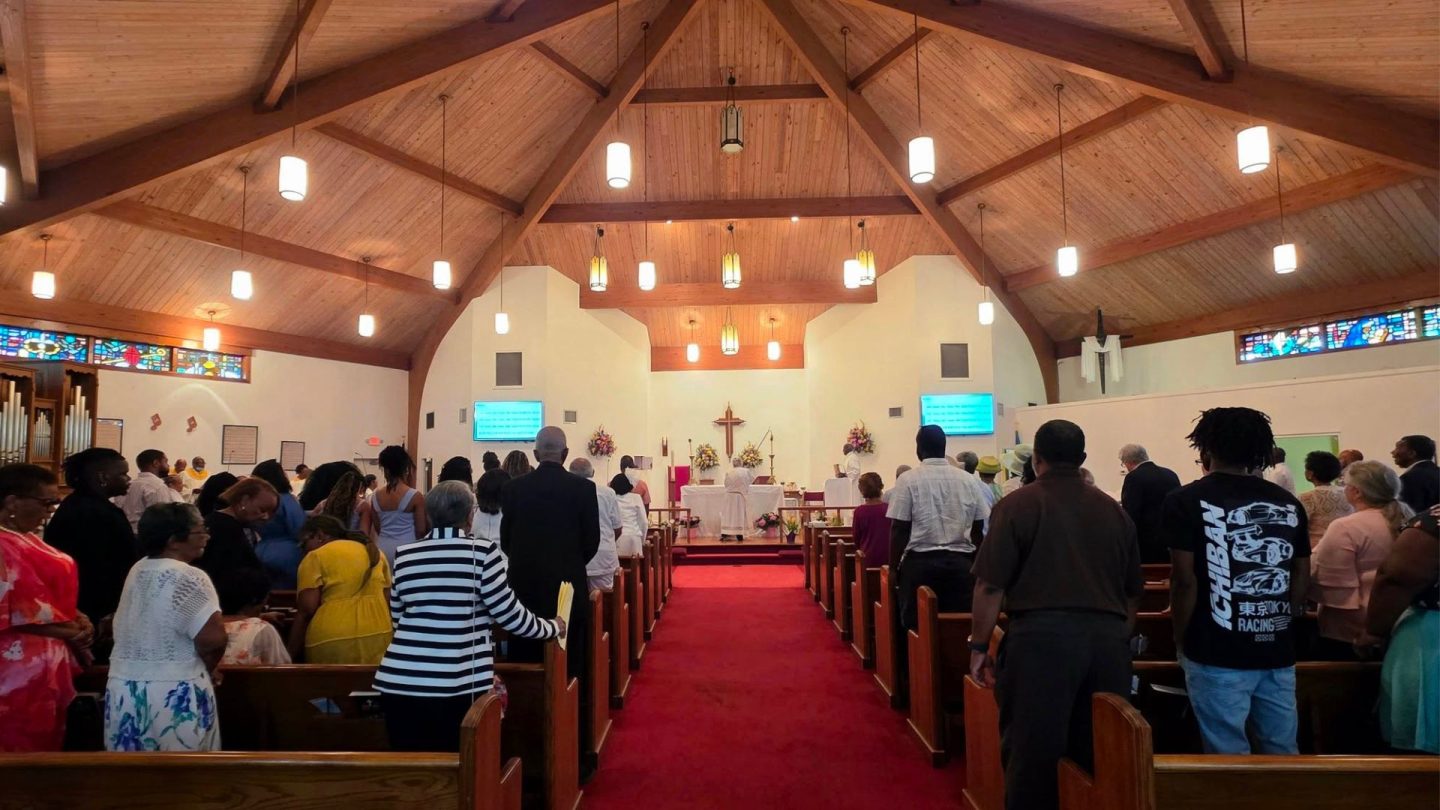
For Senior Warden Roger L. Johnson, Esq., the fact that the Episcopal Church of St. John the Baptist, Orlando, has existed for 130 years “isn’t an accident.”
While other churches – no matter the denomination – have gone by the wayside, St. John the Baptist has survived cultural and spiritual storms since 1896, primarily due to its strong, godly leadership and a congregation that has mirrored its leaders to serve the Lord and the community surrounding it.
During the weekend of April 18-19, Johnson said, St. John the Baptist is “calling people home” as part of its 130th anniversary celebration. The church of approximately 150 members will host an Anniversary Prayer Breakfast that Saturday with Dr. Lavon Wright Bracy, advocate for civil rights and education and co-founder of New Covenant Baptist Church, as keynote speaker. This is a ticketed event, with individual tickets available for $50; register at this link. On Sunday, the church will hold its Homecoming worship service. The Rev. Dr. Otis Moss III, senior pastor of Trinity United Church of Christ, Chicago, will serve as the day’s guest preacher.
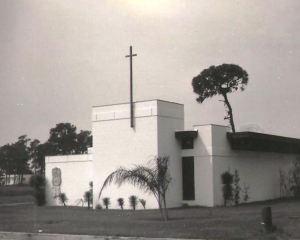
From its humble beginnings, St. John the Baptist became and has remained a staple of the Episcopal Diocese of Central Florida, with its members known for their compassionate outreach. Johnson refers to the church as “The Little Engine That Could.”
“It’s a testimony, because not a lot of things stay around for 130 years,” said Johnson, who has been a member there since 2008.
Church Leadership
Throughout its rich history, St. John the Baptist’s leaders have endured persecution. The church’s historical records show that the Rev. H.W. Greetham, who served as the church’s first spiritual leader and became known for his gentle demeanor, suffered physical trauma when local officials who “objected to his pastoral visits in segregated neighborhoods” reportedly “forcibly removed him from his bicycle and beat him.”
Johnson said Greetham, who was white, served a primarily Black congregation, something unheard of in the late 19th and early 20th centuries. During his tenure, Greetham instructed prospective members during evening gatherings in their homes and conducted Sunday worship services and church school.
“Servicing a Black congregation, he was roughed up a few times,” Johnson said.
Between 1896 and 1955, church leaders such as the Rev. G.M. Blackett, the Ven. John E. Culmer, the Rev. Morris Bartlett Cochran and the Rev. Charles N. McQueen served on a part-time basis and did not reside locally. It was not until 1955, with the installation of the Rev. John Fred Dickman, that St. John the Baptist employed its first full-time priest and vicar. Church historical accounts state that Dickman’s tenure at the Terry Street sanctuary “marked a period of notable membership growth.”
‘Street Priest’
In 1959, the Rt. Rev. Henry I. Louttit, first bishop of the Diocese of Central Florida, assigned the Rev. Canon Dr. Nelson W. Pinder to serve as vicar at St. John the Baptist shortly after his graduation from Nashotah House. Ordained to the priesthood at the church in January 1960, Pinder had no way of knowing the extent to which he would impact the church and the greater Orlando community.
“We were all sad to see Father Dickman leave us,” said Dr. Lorraine Harris, 93, unofficial historian for St. John the Baptist and a member of the congregation for nearly 70 years. “But at the same time, we were excited Father Pinder succeeded him because we knew what kind of man and leader he was. There were a bunch of us who were peers of Father Pinder’s, young adults who came together. It was an exciting time for us.”
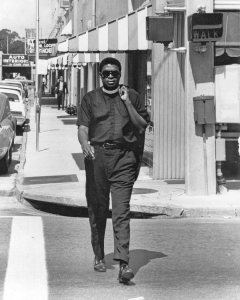
Pinder became affectionately known as “the street priest” for his involvement in activities that helped advance the Civil Rights Movement in Orlando. He organized and participated in peaceful sit-ins and protests, becoming known around the city for his leadership in the movement.
During Pinder’s early years, St. John the Baptist acquired the Atlanta Life Insurance Building, which provided space for a parish hall, offices and classrooms. In 1963, the congregation relocated to 1000 Bethune Drive and constructed a new sanctuary. Four years later, a parish hall and education building were added to help enhance the church’s legacy of service. It housed Orlando’s first Head Start program and continued the Booker T. Washington branch of the city’s public library, already located on church property.
Assigned to the diocesan office in 1969, Pinder served for three years as canon and director of the Awareness Center in downtown Orlando. He returned to St. John the Baptist in 1972, where he served until his retirement in 1995.
“Father Pinder not only blessed our church, but he blessed the entire community,” Dr. Harris said. “He faced a lot of adversity from the culture, but that was just the times we lived in. He answered God’s call without fear.”
Future and Hope
Johnson said St. John the Baptist has gone through several seasons of transition in its 130-year existence. That includes its current season after the Rev. Charles T. Myers, the church’s fifth rector, accepted a new call in November 2025. The church has been without a full-time rector since but continues to thrive, a characteristic attributed to past leadership and its ability to reach the community with Christ’s love.
“There’s no question, we’ve been blessed,” Johnson said. “Right now, we’re looking forward with gratitude, hope and renewed purpose. As we celebrate our 130th anniversary, our theme is ‘Renewed by the Spirit, Rooted in Faith,’ and we embrace that, knowing the same Spirit that has sustained St. John the Baptist for more than a century will guide us into the future to continue our work.”
CFE Digital Digest
The CFE Digital Digest is our monthly email newsletter featuring timely news, stories, and updates between print issues of the Central Florida Episcopalian.