Easter Promise: Everything Sad Is Coming Untrue
- Written by The Rt. Rev. Dr. Justin S. Holcomb
- Length 11 minutes, 24 seconds
- Category All News & Content, Articles, Bishop Holcomb, Bishop's Blog, Liturgical Seasons
 Email
Email
Bishop Holcomb presents the resurrection of Jesus as the decisive victory over sin, suffering and death, grounding the Christian hope that even the deepest sorrows will ultimately be undone. He invites readers to trust that, despite present pain and doubt, Christ’s resurrection assures a future where God restores, heals and makes all things new.
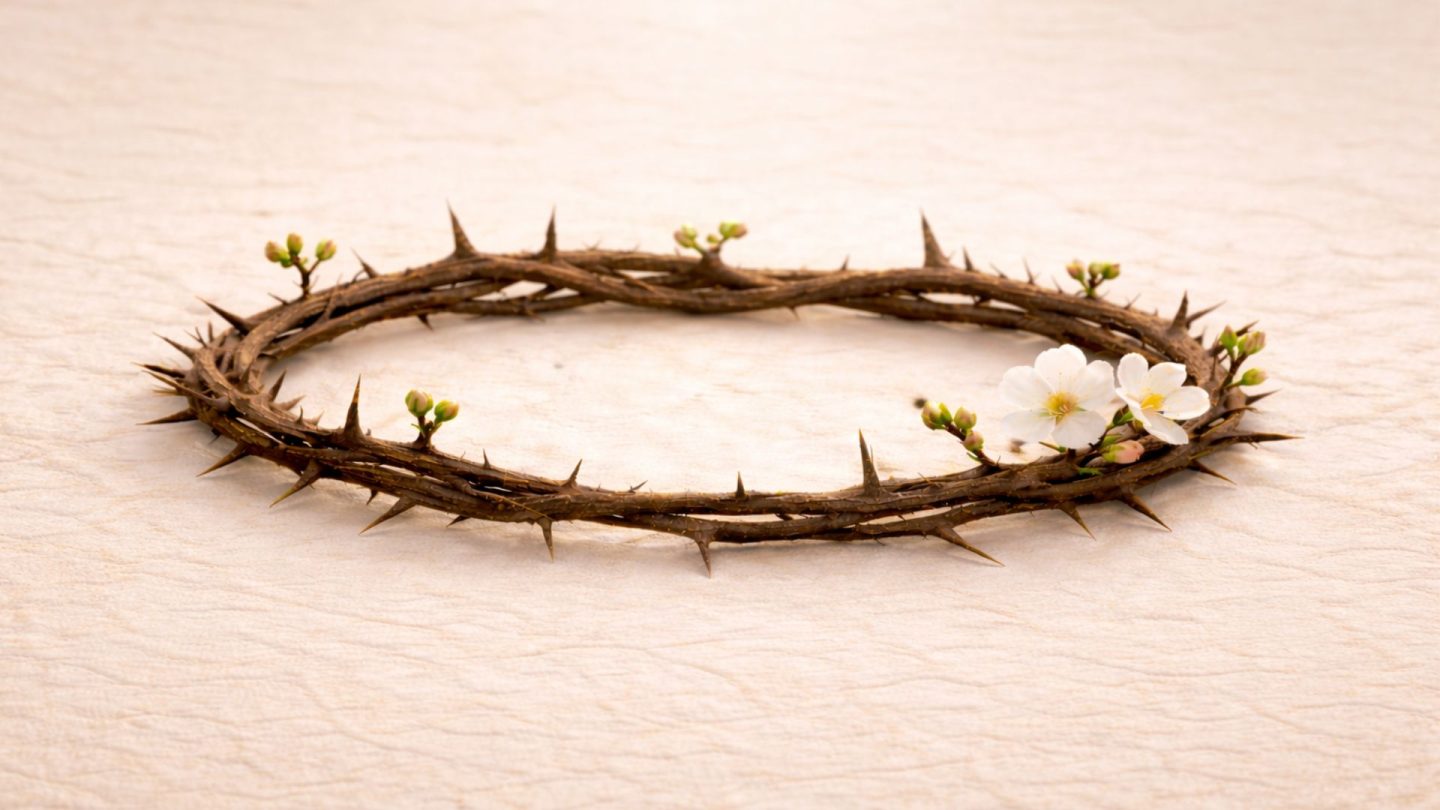
On Easter morning, we sing, “Alleluia,” which means, “Praise the Lord,” and we shout it to one another because God has intervened. In Jesus Christ, God has rescued, redeemed and will raise us with him. On the cross, Jesus bore your sins and paid the penalty for all of them. Your sins were buried with him in the grave, and he left them behind in the grave forever. He has risen from the dead – victorious over sin, Satan, hell, death and the grave – and he will raise you to his throne. Sin is defeated. Death is dead. Jesus is alive, and he’s making all things new.
Too Good to Be True?
On Easter, we have every reason to celebrate. But let’s be honest. This sometimes sounds like a really good thing – to celebrate for an hour on Easter, but it’s maybe too good to be true. Sure, it’s a nice, well-meaning sentiment, but how is it helpful in the face of real life? We know all too well that life is filled with suffering and sin and sorrow.
The late pastor and writer Tim Keller faced this very question when he stood before his congregation just five days after the Sept. 11 attacks. His sermon that day, later adapted in his book Jesus the King, has shaped how I think about the Resurrection in the face of suffering.
So what does Easter mean when you feel overwhelmed by guilt and condemnation? What does it mean for the grief of a miscarriage, for the haunting wounds of abuse and the shame that seems to cling to you, for the addiction that grips you and the regrets you can’t undo, for the diagnosis you always feared, for the despair that just doesn’t lift, when violence shatters a place that should have been safe, when the lie grows louder and louder that ending it all would finally make the pain stop?
We live in a world of sadness, a world no mere sentiment can fit. I’ve been listening to a song by Jason Gray called, “Every Sad Thing Is Coming Untrue,” in particular, Part 2. The beginning of this song captures the ache of real life. Gray sings this: “Another nail in another coffin, arms that held you return to dust/ Yet in our grief, we know that death must be a liar, when no goodbye is ever good enough/ How could it be that everything sad is coming untrue?”
That’s the question. We have “Alleluia, Christ is risen,” and then we have real life, and that’s the question I have – maybe the one you have: How could it be that everything sad is coming untrue?
I love that line because it acknowledges our desire for a better world. We all have a longing for healing, for forgiveness, for wholeness. Deep down, we have a yearning that death, sin and suffering are not the final word on you.
In his masterpiece The Brothers Karamazov, Dostoevsky, wrestling with the brutality of suffering, writes this: “I believe like a child that suffering will be healed and made up for. … That it will suffice for all hearts, for the comforting of all resentments, for the atonement of all the crimes of humanity, that it will make not only possible for us to forgive but to justify all that is that has happened.”
That’s a beautiful quote, but to say all our suffering will be healed can seem impossible. And as he put it, maybe childish, or an idle hope. But what if the impossible has already begun?
‘Is Everything Sad Going to Come Untrue?’
Just after the climax of Tolkien’s The Lord of the Rings, Sam Gamgee discovers that his friend Gandalf is not dead, as he thought – and neither is he. He comes too, sees Gandalf, and says, “I thought you were dead! And I also thought myself dead. What’s happened with the world? Is everything sad going to come untrue?”
The answer for the Christian faith is a resounding yes. Because Jesus rose from the dead, everything sad is coming untrue – and, as Keller put it, it will somehow “be greater for having once been broken and lost”– in the birth, death and resurrection of Jesus. That means everything sad is being undone, all suffering will be redeemed, all your brokenness will be healed, all your sorrow will be transformed into joy. Keller wrote in Jesus the King: “On the Day of the Lord – the day that God makes everything right, the day that everything sad comes untrue – on that day the same thing will happen to your own hurts and sadness. You will find that the worst things that have ever happened to you will in the end only enhance your eternal delight.”
Saying things like that is nothing but scandalous. The question from Tolkien in the mouth of Sam, “Is everything sad coming untrue?” is profound, but it’s scandalous too. He’s not saying, “Are good things going to happen?” He’s asking whether the sad things will be undone. And his question recognizes there’s something wrong with the world, that it’s a place that has some blessings, but it’s also filled with sadness, cursed by sin. It’s not the way it’s supposed to be. But because Jesus is alive, all sad things one day will be made untrue. The Resurrection doesn’t just heal wounds; it overturns and rolls back the curse itself.
This is what Paul was telling us in Romans 8 when he said, “I consider the sufferings of this present time are not worth comparing with the glory that is to be revealed” (v. 18). He’s not minimizing your suffering. He’s maximizing the glory that’s to come. Your suffering and my suffering are real, but the glory that’s coming because of Jesus is greater still.
J.R.R. Tolkien, who asked the question through his characters, “Are all sad things coming untrue?” – he knew suffering. He was a soldier in World War I, and he said that the very best stories have a eucatastrophe, not a catastrophe, but a eucatastrophe, which he says is a sudden, unexpected turn toward joy. And he said the greatest eucatastrophe of all human history is the resurrection of Jesus Christ, where joy breaks through sorrow, where life conquers the finality of death.
The Resurrection is not an idle myth, and it’s not sentiment. It’s the power of God breaking into your darkness, announcing that death is not the final word on you. If the Resurrection were only a sentimental idea, the promise that sadness could come untrue would collapse under the weight of the real world. But because the Resurrection is true, it changes everything.
The Resurrection Changes Everything
In the promise of Revelation 21, this is what the empty tomb shouts into the middle of our darkness. “He [the risen Lord] will wipe away every tear from their eyes, and death shall be no more, neither shall there be mourning, nor crying, nor pain, for the former things have passed away. … ‘Behold [Jesus says], I am making all things new.’”
The beauty of that is that it doesn’t renew the heartache of every loss we feel right now, but it anchors it in the context of eternity. If Jesus Christ actually rose from the dead, as we read in Corinthians, if he really walked out of a tomb and appeared to hundreds of people who testified to it, banked their life on it – if he were dead and then raised from the dead, it’s no sentiment to say that everything’s going to be all right. Whatever we’re worried about right now, whatever we’re afraid of, whatever we’re grieving, the promise is that it’s going to be OK.
The Resurrection does not erase your grief. It doesn’t silence your mourning. It promises that while you grieve, you can grieve with hope. Gabriel Marcel puts it together as an Easter promise: “Hope is a memory of the future.”
Because Jesus is risen, the eternal joy Christ secured for you is already reaching back out of the future into your present sorrow right now. This victory over death shapes how you endure now with a hope that’s alive, real and unstoppable. Because if Jesus has been raised from the dead, it will be OK.
Christianity does not traffic in escapism. It’s not mere consolation. The story of Christianity is the story of this week. It’s death and Resurrection, and it means that not only you, but also the entire world, is being made new by the risen Jesus.
There’s more to Jason Gray’s song. He started by saying, “How could everything sad be coming untrue?” And he continues, “Every father, helpless and angry/ Every mother with her heart on the shelf/ Every daughter whose innocence was stolen/ Every son who couldn’t help himself./ The winter can make us wonder if spring was ever true/ But every winter breaks upon the Easter lilies’ bloom/ Could it be that everything sad is coming untrue?/Could you believe everything sad is coming untrue?”
From Despair to Wonder to Hope
I love that through his song he moves from “How could it be that everything sad be coming untrue?” to “Could it be that everything sad is coming untrue?” to “Could you believe that everything sad is coming untrue?” This shift, from despair to wonder to hope, is captured in C.S. Lewis’ The Lion, the Witch, and the Wardrobe, in which there is a kingdom called Narnia, and Edmund, one of the children in the story, has betrayed his family and fallen under the white witch’s power.
According to the Deep Magic written into Narnia’s very foundation, all traitors belong to the white witch, and she has the right to demand his life, which she does. But then Aslan, the great lion who represents Jesus Christ, steps in and offers himself in Edmund’s place. The white witch begins to gloat, certain she has finally conquered her archenemy, Aslan. She says to Aslan before his death, “You know that every traitor belongs to me as my lawful prey and that for every treachery, I have a right to a kill.”
And so the forces of darkness then pounce on Aslan, and they jeer and mock as he is humiliated. They shave his mane, bind him, and he’s slain. Edmund’s sisters, Lucy and Susan, are heartbroken, and they weep over his body through the entire night.
When Aslan is killed on the stone table, it is clear that evil has won. But at dawn, they hear a great cracking sound. The stone table has split in two, and they see Aslan alive, asking for an explanation. They’re wondering, “What in the world just happened? We saw you die.”
Aslan explains, “Though the White Witch knew the Deep Magic, there is a magic deeper still which she did not know. When a willing victim who had committed no treachery was killed in a traitor’s stead, the Table would crack and Death itself would start working backward.”
Death is undone. And so it is with Jesus. There is a deeper magic: the eternal love and mercy of God that is stronger than sin, Satan, hell and the grave. And this is not a fairytale optimism of childhood stories. This is reality: sealed by the empty tomb and a risen Jesus, who promised: “I am making all things new” (Rev. 21:5).
And it’s that promise that Jason Gray ends his song with when he says, “Broken hearts are being unbroken/ Bitter words are being unspoken, the curse undone/ The veil was parted, the garden gate will be left unguarded/Could it be everything sad is coming untrue?/ Oh, I believe everything sad is coming untrue/ In the hands of the One who is making all things new.”
What does this mean for you and me: that Jesus is alive, death is undone, the curse is broken and everything sad is coming untrue? There are three invitations, and they’re all for you. Pick one, pick two, pick three – pick whichever ones you like and whichever ones you need. If you are weary, hear Jesus say, “Come to Me, all who labor and are heavy laden, and I will give you rest” (Matt. 11:28). Or maybe you doubt, thinking it does sound childish and like a myth. There are good reasons to believe it’s completely real, but if you’re doubting, cry out to him, “Lord, I believe; help my unbelief!” (Mark 9:24). But if you believe, rejoice. Just hold fast to Christ, trusting that he’s making all things new, and live in the light of the Resurrection, knowing your entire story is secured.
Whether you’re weary, doubting or believing, come. Come to Jesus, who won for you a joy that can never be stolen, a love that can never be lost and a hope that can never be shaken. Thanks be to God that because Jesus is alive, all things sad are coming untrue, and you are invited and given a joy that will never end.
“Alleluia! Christ is risen!”
“The Lord is risen indeed.” Amen.
CFE Digital Digest
The CFE Digital Digest is our monthly email newsletter featuring timely news, stories, and updates between print issues of the Central Florida Episcopalian.